

Salvaging the South African Steel Industry
Salvaging the South African Steel Industry explores the political-economy factors behind the current crisis in the steel sector and puts forward a range of possible recommendations to address both supply-side and demand-side factors.

AIDC Submission to Parliament on the 2026 Revised Fiscal Framework and Revenue Proposals
The Alternative Information & Development Centre (AIDC) argues that the 2026 Medium-Term Budget Policy Statement (MTBPS) fiscal framework stabilises debt and achieves a primary surplus, but at the expense of constitutional rights, public services, and livelihoods.

AIDC is hiring!
AIDC is seeking an experienced and politically engaged Programmes Coordinator to provide strategic leadership and coordination across AIDC’s programmes. An Energy Democracy Programme Officer to contribute to its research, campaigning, advocacy, and popular education work on South Africa’s energy transition, and a Multimedia Officer.

2026 MTBPS Statement: Balanced books, but empty plates
Economic transformation must come before fiscal surpluses. South Africa urgently needs large-scale public investment in public services, social protection, and economic and social infrastructure.
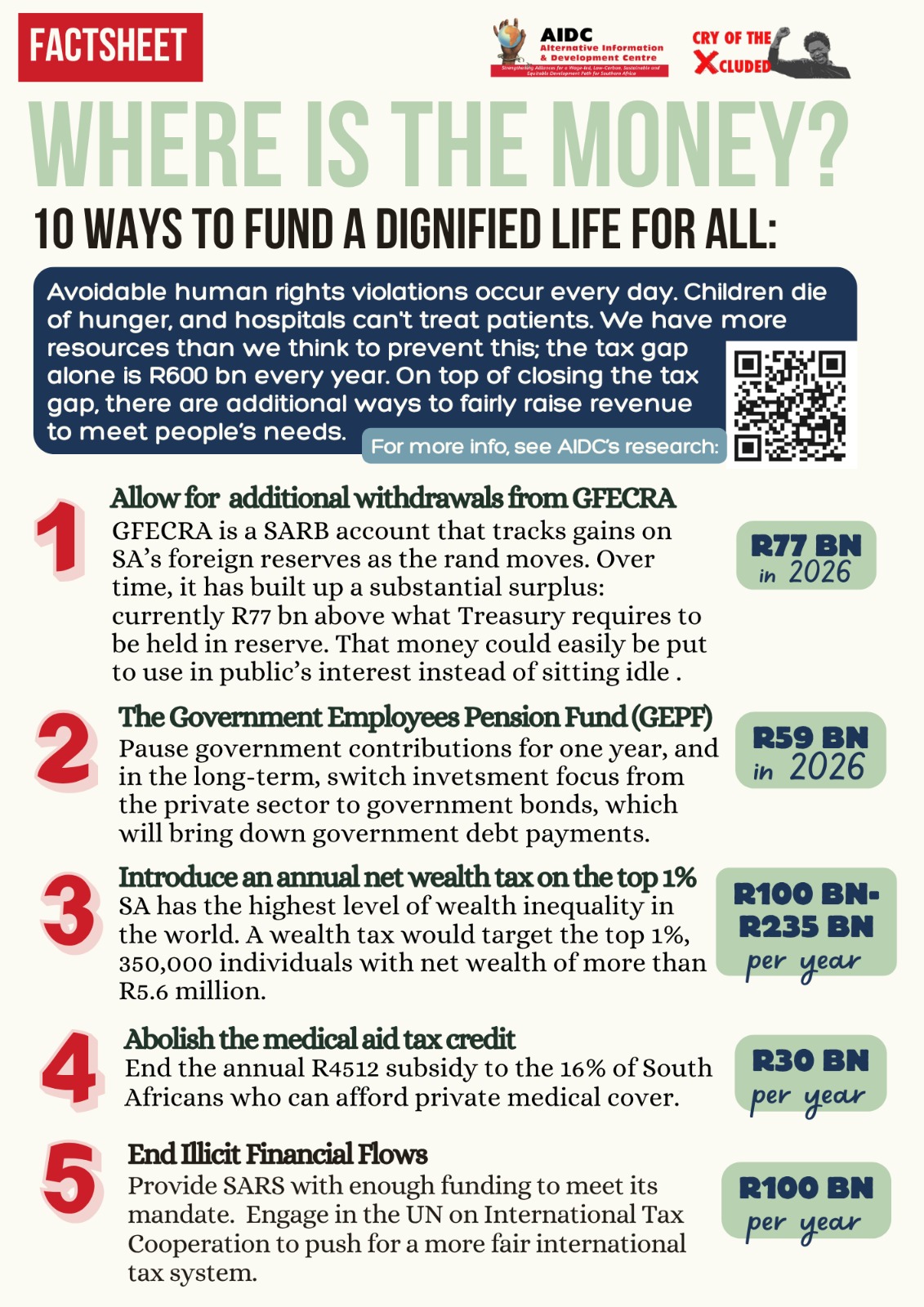
FACTSHEET: 10 WAYS TO FUND A DIGNIFIED LIFE FOR ALL!
Spending most of the budget on the social wage isn’t the same as meeting constitutional obligations. The world’s most unequal country can and must redistribute far more so everyone can live with dignity.

Rethinking Tax Justice in South Africa: A 5-Part Briefing Series
Is South Africa’s tax system at its limits, or can more be done?

AIDC Submission to National Treasury on Substantive Tax Proposals for the 2027 Budget
The AIDC submission sets out key substantive tax proposals for South Africa’s 2027 Budget. It focuses on making the tax system more progressive, mobilising critical revenue, and addressing severe economic inequality.

AIDC Submission to the Standing Committee on Finance on the 2026 Draft Bill, Draft Taxation Laws Amendment Bill and Draft Tax Administration Laws Amendment Bill
The AIDC submission to Parliament’s Standing Committee on Finance addresses the 2026 draft Rates, Taxation Laws Amendment (TLAB), and Tax Administration Laws Amendment (TALAB) Bills.

The real PIC scandal is what we do with workers’ trillions
The latest turmoil at the Public Investment Corporation (PIC) should deeply concern every public servant in South Africa.

The CIT Gap in SA: How can we close the R79bn CIT tax gap
This study provides the first bottom-up estimate of the corporate tax gap for South Africa. The tax gap is the difference between what firms actually reported and what they should have paid in the absence of any misreporting.

AIDC celebrates Constitutional Court victory protecting Coastal Communities, the Environment, Livelihoods and the Right to Say No!
The AIDC welcomes the Court’s emphasis on Section 24 of the Constitution and its interpretation of the interplay between environmental protection and development.

Discussion Paper: An Alternative Approach to Green Industrial Policy for South Africa
This discussion paper argues that South Africa’s current green industrial policy is too narrow and unambitious to deal with the unemployment and climate crises. It proposes a radical, needs-based approach to industrial policy, and an end to austerity.

Press statement: SA’s unemployment crisis needs bolder solutions
AIDC calls for a needs-based green industrialisation strategy to simultaneously overcome mass unemployment and climate change.
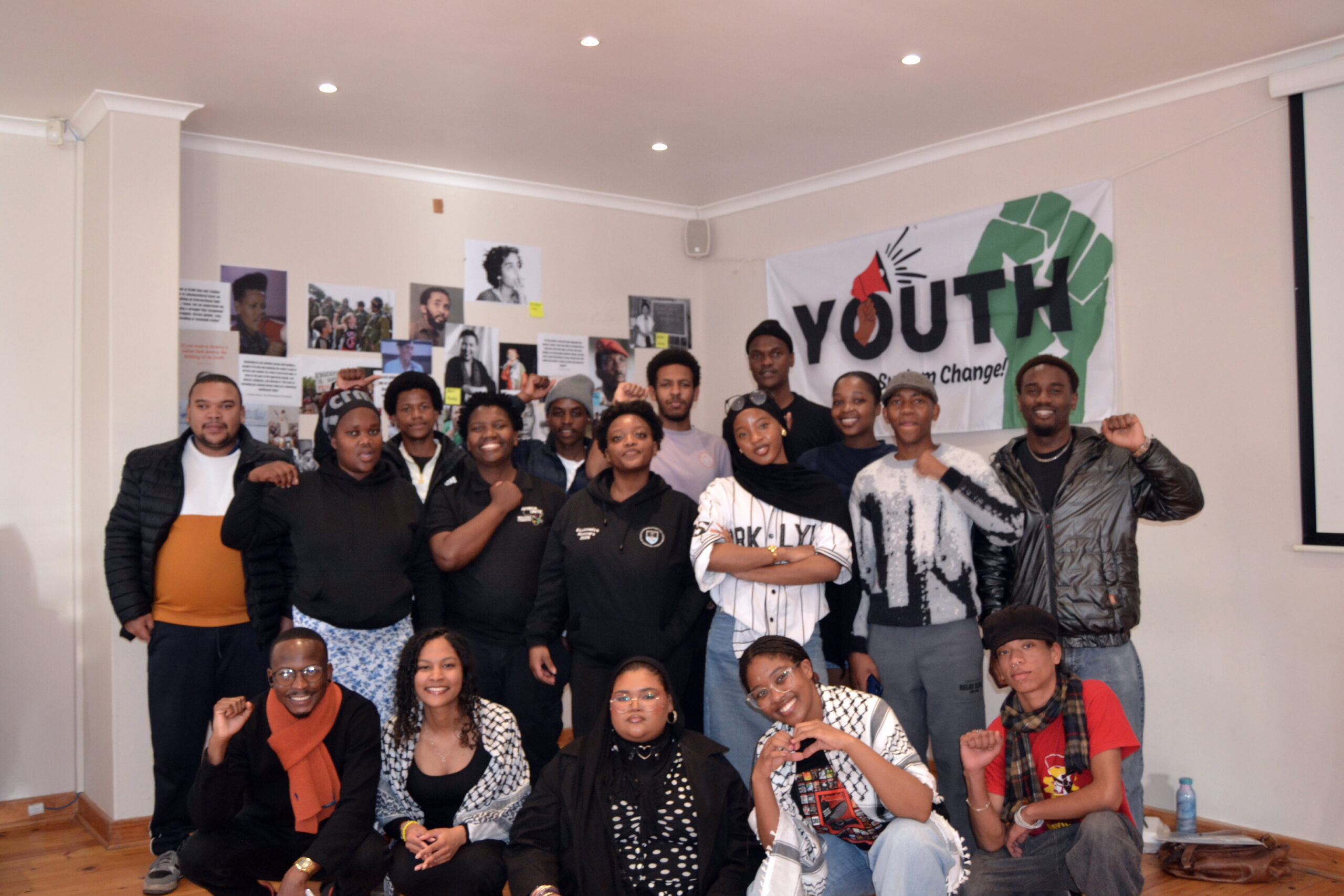
Cultivating Change: Lessons from our Winter Youth Camp
Twenty-four young activists came together from over eight organisations across four provinces, united by a shared commitment to understanding and ultimately transforming the conditions that shape their communities.

National Treasury’s withholding of funding to municipalities is a false solution to addressing municipal financial distress
The National Treasury’s decision to withhold July 2026 equitable share transfers from 69 municipalities is a false solution that punishes the poor while failing to address systemic financial problems.

Prof. Noor Nieftagodien: What Is Driving South Africa’s Immigration Debate?
“The normalisation of anti-immigrant, afrophobia, xenophobia is a genie you cannot put back in the bottle,” Professor Noor Nieftagodien.

Beyond the Maledu Judgement: Defending community land against mining expansion
Community organisations and advocates convened in the North West to strategise on protecting land rights amid ongoing threats of mining expansion.

Joint Press Statement: 8th Session of Africa’s Regional Indaba on the UN Binding Treaty Kicks Off This Week
Human rights are not negotiable. Corporate accountability must be binding. The time for the UN Binding Treaty is now.

People Against Budget Cuts Challenge Treasury on Regressive Budget Policies
The People Against Budget Cuts (PABC) argues that the 2026 Budget is fiscally regressive, prioritising tax breaks for the wealthy and elite while failing to address structural poverty and unemployment.

Briefing Paper: A Critical Perspective on the Growth and Inclusion (GAIN) Strategy and New Economic Policy
This briefing critiques GAIN for being constrained by a fiscal framework that neglects the importance of public investment in enhancing state capacity and service delivery.

AIDC Statement on the rising tide of Afrophobia and Xenophobia in South Africa
AIDC is gravely concerned at the spread of Afrophobic and xenophobic sentiment gripping large parts of South African society.

Taxation of Income from Wealth in South Africa: A Review of Dividends Tax
Current tax policy in South Africa creates a significant disparity that reinforces inequality.

AIDC Submission to Parliament on the White Paper Review of Local Government
The Alternative Information & Development Centre (AIDC) submitted a comment to the Department of Cooperative Governance and Traditional Affairs on the Reviewed White Paper on Local Government.

Building a People’s Response to Budget 2026
Across the country, communities are organising against budget cuts, privatisation, unemployment, and the erosion of public services.

